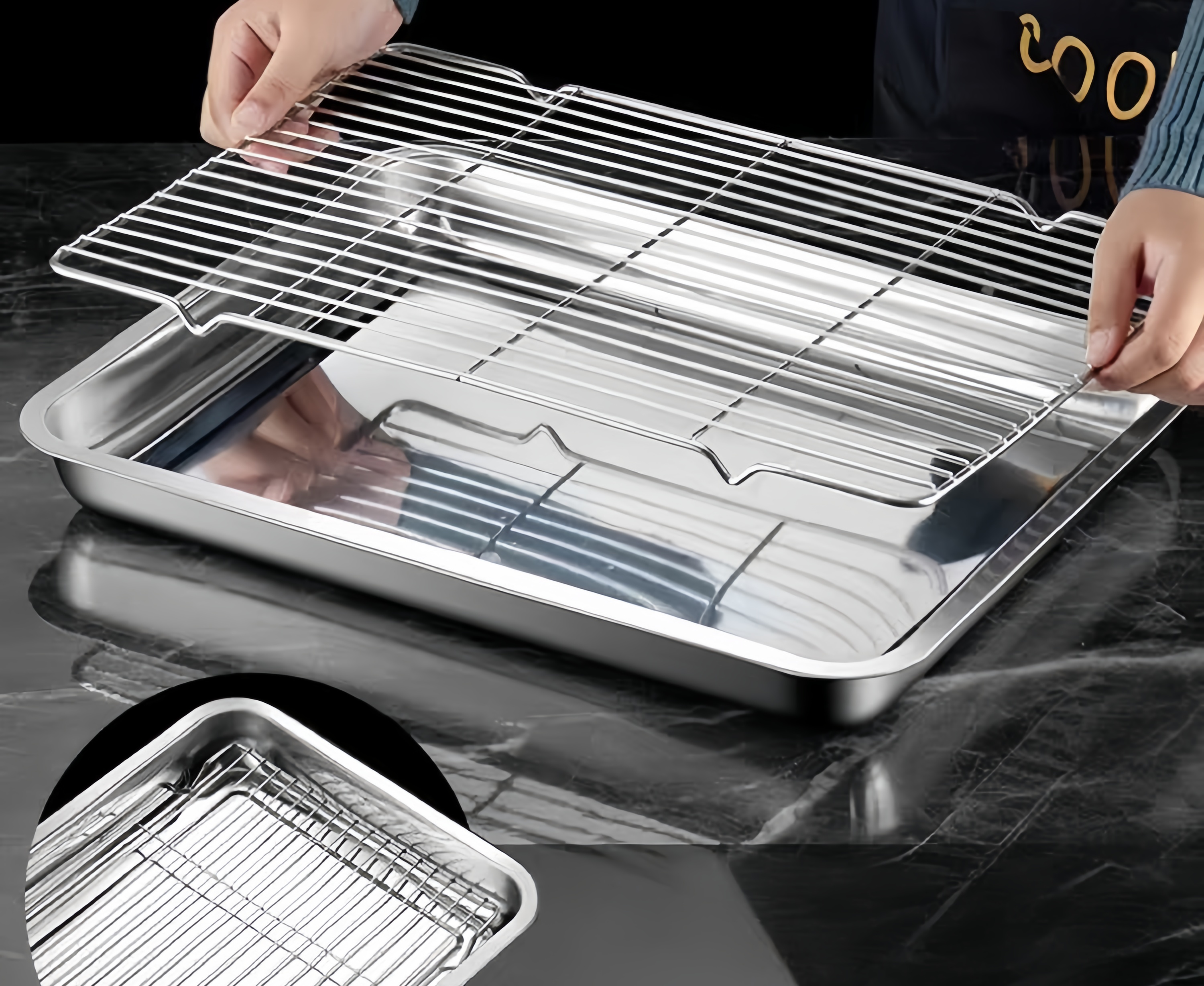

Many buyers believe stainless steel never rusts. In reality, stainless steel is corrosion-resistant, not completely rust-proof under every condition.
Stainless steel protects itself through a passive chromium oxide layer. If this surface layer is damaged or exposed to harsh environments for a long time, rust spots or discoloration may appear. 304 stainless steel performs well in many food and general environments, but it can be less suitable for chloride-rich conditions such as saltwater or heavy salt exposure. 316 stainless steel offers better resistance in chloride, acidic, or high-temperature environments because of its molybdenum content.
Common causes of rust on BBQ grill mesh include:
Long-term exposure to salt
Improper cleaning chemicals
Leaving food residue on the mesh
Storage in humid packaging
Contact with carbon steel tools
Surface scratches
Poor material grade
Contamination during production or transport
For buyers, rust prevention starts with correct product selection. If your market includes coastal areas, seafood grilling, or humid outdoor storage, consider 316 stainless steel or improved surface treatment. If your customers use the product for general backyard grilling, 304 stainless steel is often suitable.
Packaging also matters. Products should be dry before packing. Cartons should protect the mesh from moisture during storage and shipping. For long-distance sea freight, buyers may request moisture-resistant packaging or desiccants.
End users should also clean the grill mesh after use, dry it before storage, and avoid strong chlorine-based cleaners unless the material and cleaning method are suitable.
Buyer’s Tip: If your customers complain about rust, check the material grade, environment, cleaning method, packaging moisture, and whether the mesh contacted carbon steel during storage.