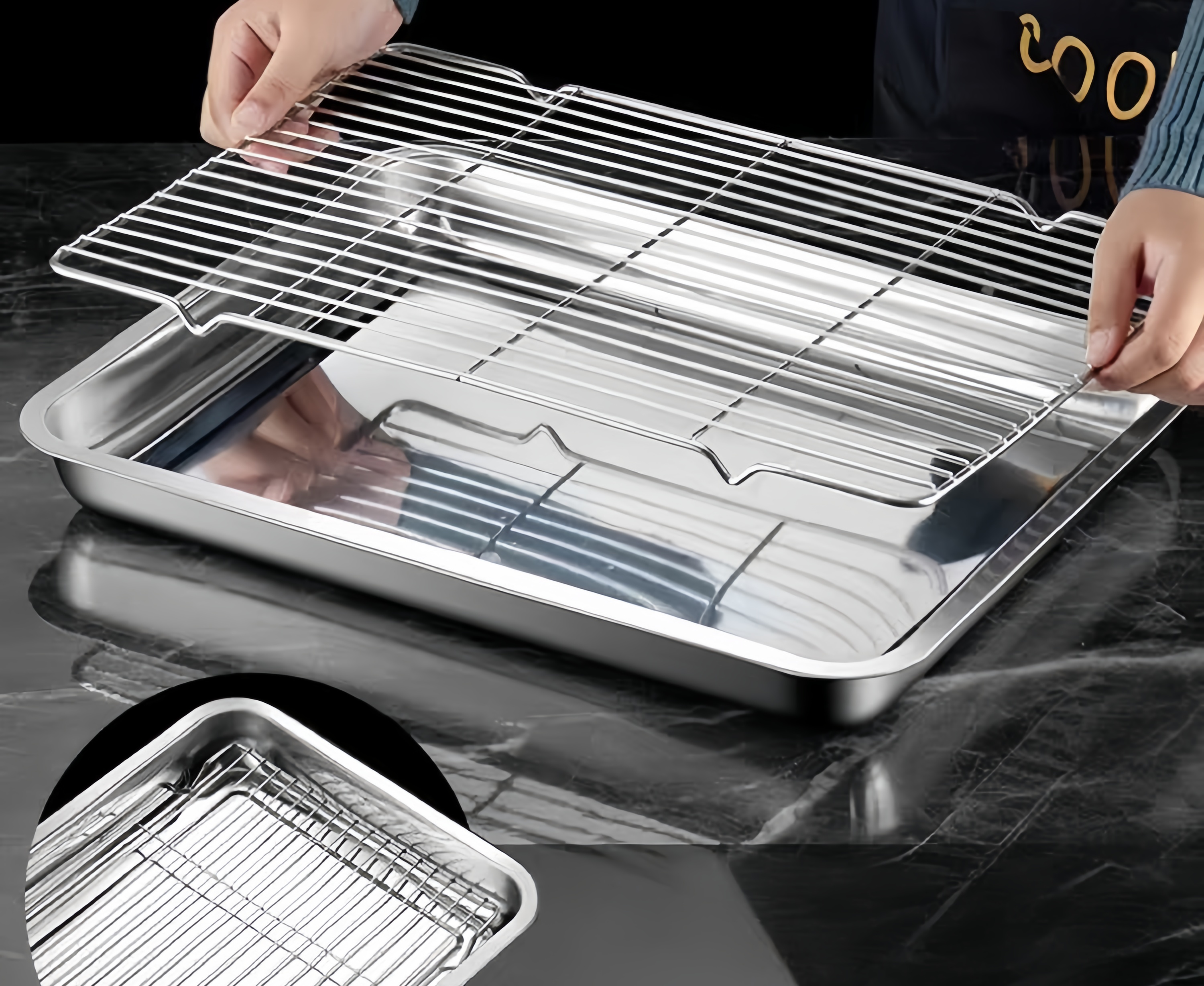

Selecting the right stainless steel wire mesh is one of the most important decisions for commercial buyers in the food processing, baking, catering, and barbecue equipment industries. The two most common materials are 304 stainless steel and 201 stainless steel. Although they look similar, they have significant differences in corrosion resistance, durability, service life, and cost.
Understanding these differences will help wholesalers, distributors, and equipment manufacturers choose the most suitable material for their projects.
What Is 304 Stainless Steel?
304 stainless steel is the most widely used stainless steel grade in the food industry. It contains approximately 18–20% chromium and 8–10.5% nickel, providing excellent corrosion resistance, good weldability, and long-term durability. Because of these properties, 304 stainless steel is widely used in food processing equipment, commercial kitchens, and bakery equipment.
For applications that require frequent washing, exposure to moisture, or direct food contact, 304 stainless steel is usually the preferred choice.
Typical applications include:
- BBQ grill mesh
- Baking cooling racks
- Oven racks
- Food drying racks
- Wire mesh trays
- Commercial kitchen equipment
What Is 201 Stainless Steel?
201 stainless steel belongs to the 200-series stainless steels. Compared with 304, it contains less nickel and more manganese, making it a more economical material while still offering good mechanical strength.
201 stainless steel is suitable for applications where the working environment is relatively dry and corrosion resistance requirements are lower.
Typical applications include:
- Indoor storage racks
- Display racks
- Light-duty wire products
- Cost-sensitive commercial equipment
For products used outdoors or in humid environments, additional consideration should be given to corrosion resistance.
| Feature | 304 Stainless Steel | 201 Stainless Steel |
|---|---|---|
| Corrosion Resistance | Excellent | Good |
| Food Contact | Excellent | Suitable for many applications |
| Moisture Resistance | Excellent | Moderate |
| Outdoor Use | Recommended | Limited |
| Service Life | Longer | Shorter in harsh environments |
| Cost | Higher | More economical |
For businesses that prioritize long-term durability and food safety, 304 stainless steel generally offers better overall performance. For projects with limited budgets and less demanding environments, 201 stainless steel can be a practical alternative.
Which Material Is Better for Commercial Food Applications?
The best material depends on the working environment and product requirements.
Choose 304 stainless steel if you need:
- Excellent corrosion resistance
- Long service life
- Frequent cleaning and sanitation
- Commercial food processing
- Bakery and catering equipment
- Outdoor BBQ products
Choose 201 stainless steel if you need:
- Lower purchasing cost
- Indoor commercial applications
- Light-duty equipment
- General industrial use in dry environments
By selecting the right material, buyers can balance product performance, maintenance costs, and overall investment.
OEM Stainless Steel Wire Mesh Manufacturer
A reliable manufacturer should not only provide high-quality materials but also offer professional customization services.
At Little Monkey, we specialize in manufacturing stainless steel wire products for global customers. Our products include stainless steel grill mesh, baking cooling racks, drying racks, wire mesh trays, and custom wire products.
We provide:
- OEM & ODM manufacturing
- Custom sizes and specifications
- 304 & 201 stainless steel options
- Factory-direct pricing
- Stable quality control
- Worldwide export experience
Whether you require standard products or customized wire mesh solutions, our experienced production team is ready to support your project.
Conclusion
Both 304 and 201 stainless steel wire mesh have their own advantages. The right choice depends on your application, budget, and operating environment.
If your products are used in commercial food processing, bakeries, restaurants, or outdoor environments, 304 stainless steel is generally the preferred option because of its superior corrosion resistance and longer service life. For cost-sensitive projects used in less demanding conditions, 201 stainless steel can provide an economical solution.
Choosing the right manufacturer is just as important as choosing the right material. A professional supplier can help you select the most suitable stainless steel wire mesh solution for your business while providing consistent quality and reliable OEM services.