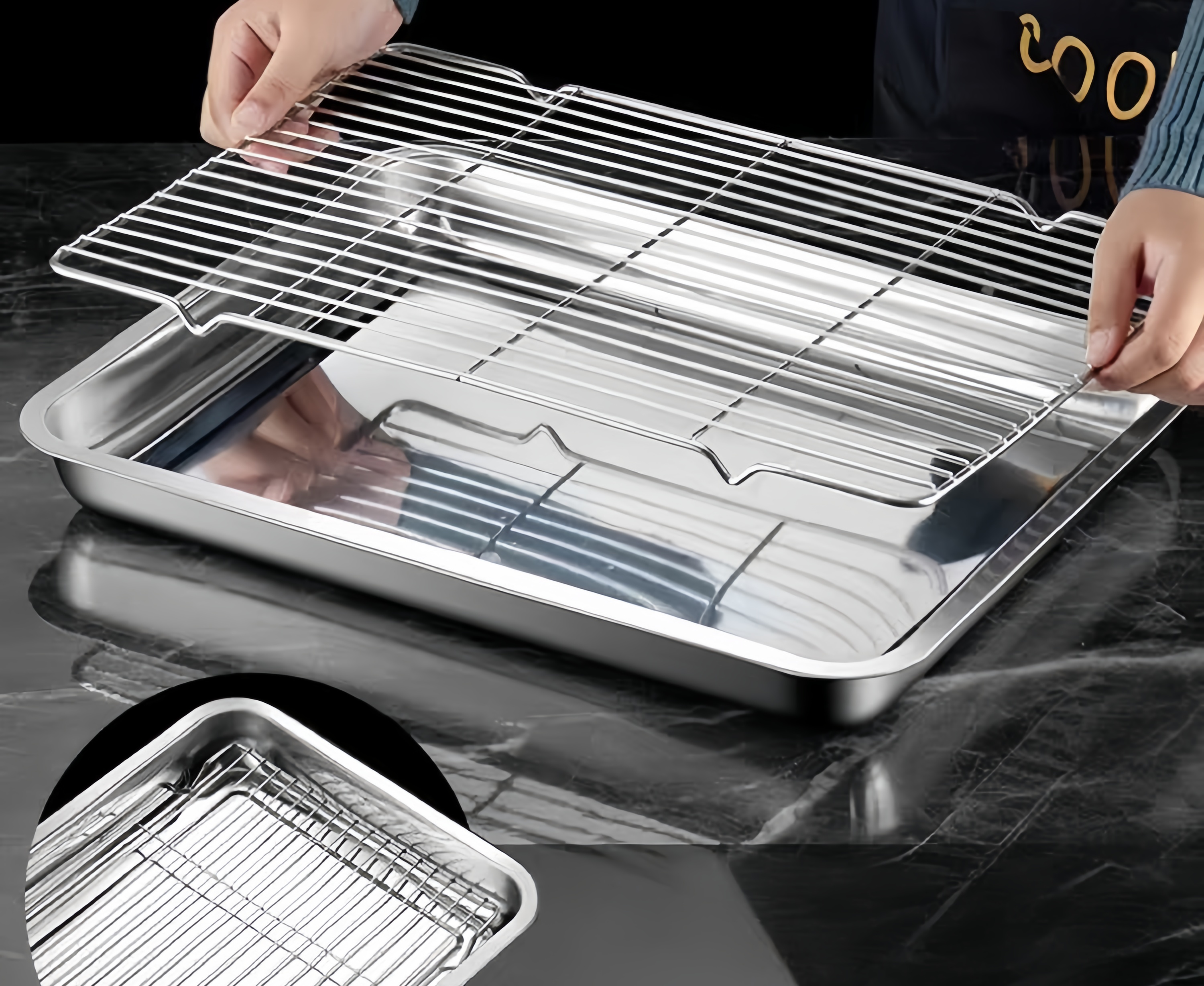

At the quotation stage, the unit price often appears to be the clearest way to compare two grill grates. One supplier may be slightly cheaper, another may use thicker wire, and a third may offer better packaging. The numbers fit neatly into a purchasing spreadsheet.
Then the product enters a busy commercial kitchen.
After every service period, someone must remove grease, burnt residue and food particles from the grate. This work is repeated far more often than the original purchase. Over the product’s service life, the design of a straight bar grill grate may affect cleaning labor just as meaningfully as its initial price.
The Straight Bar Grill Grate Enters a Different Calculation
Purchase price is paid once for each product. Cleaning time returns after every use.
For a household customer, a small difference in cleaning effort may be little more than an inconvenience. For a restaurant, catering company or high-volume barbecue operation, the same difference is repeated across employees, shifts and multiple pieces of equipment.
This does not mean that one grate design is automatically cheaper to maintain. Cleaning time depends on the food being cooked, the amount of residue, the cleaning tools, the detergent, the equipment layout and the operator’s procedure.
It does mean that “easy to clean” should be treated as a testable product characteristic rather than a decorative sentence in a catalogue.
Geometry Becomes Part of the Workflow
The parallel rods of a straight-bar grate create a clear cleaning direction. A brush or cleaning tool may be able to travel along the bars without repeatedly changing direction, particularly when the spaces between them remain accessible.
That advantage can disappear if other parts of the structure interrupt the cleaning path. Closely positioned cross supports, unnecessary corners or heavy weld buildup can create locations where residue collects.
The top of the grate may look simple while the underside requires considerably more work. For this reason, commercial buyers should inspect both sides of the physical sample.
Our Straight Bar Stainless Steel Grill Mesh can be customized by overall dimensions, frame thickness, inner-bar diameter and bar spacing. These choices influence cooking performance, but they also influence how the product is cleaned and maintained.
The Cheapest Grate Can Create an Expensive Routine
Imagine two grates with the same outside dimensions. Both fit the equipment, support the required food and appear acceptable during initial inspection.
The first has an open, orderly underside that workers can reach using their normal cleaning tools. The second contains several difficult intersections where grease repeatedly accumulates.
The second grate may cost slightly less to purchase. Yet if it takes longer to clean every day, the original saving can gradually disappear into routine labor.
This is the hidden cost that is rarely shown in a quotation. It does not appear in the product weight, material price or carton size. It appears later in the kitchen’s operating workflow.
A useful procurement comparison therefore asks not only, “How much does one grate cost?” but also, “What must happen every time this grate is cleaned?”
Easy to Clean Must Be Demonstrated
A new product can look easy to clean when it is unused. The better test begins after representative cooking conditions have created real residue.
The buyer should use the cleaning method expected in the target market. If restaurant employees normally use a particular brush, sink, soaking process or commercial washing system, the sample should be evaluated within that workflow.
The purpose is not to create an artificial test that makes the product look good. It is to discover whether workers can reach the bar surfaces, frame connections, welds and underside without unusual tools or excessive effort.
The result may reveal that a small structural adjustment improves access. It may also show that the original design already performs well and should not be changed unnecessarily.
Once the cleaning method is accepted, the buyer can record it together with the approved sample and drawing.
Cleaning Access Must Be Balanced with Food Support
Simply increasing the distance between bars may provide more access, but it can also change what food the grate can support. Smaller products may fall through wider spaces, while extremely narrow spacing creates more metal surface and additional areas to clean.
The correct spacing therefore comes from the intended menu and equipment—not from cleaning convenience alone.
A commercial buyer sourcing grates for whole cuts of meat may make a different decision from a buyer serving small seafood, vegetables or mixed foods. The required wire diameter and frame construction may also change according to load and product size.
This is why a factory needs to know the application before recommending a structure. “Commercial barbecue” is a useful starting point, but information about the food, equipment and cleaning routine produces a much more practical quotation.
Hygienic Design Is More Than a Polished Surface
Electropolishing can give stainless steel a bright, smooth and clean appearance, but surface treatment cannot correct every design problem. A polished product may still contain inaccessible joints or structural areas that are difficult to maintain.
For commercial food-equipment buyers, cleanability should be considered from the design stage. NSF’s overview of food equipment standards explains that food-equipment requirements can address materials, design, construction and performance.
Referencing this information does not mean that a particular grill grate is NSF certified. Only a product that has completed the relevant certification process may use an NSF certification claim or mark.
Buyers should identify the regulations, customer standards and documentation required in their own market before ordering.
The Drawing Should Reflect the Cleaning Reality
A technical drawing normally records length, width, wire diameter, spacing and frame dimensions. For a commercial product, it can also help identify the surfaces and intersections that matter most during cleaning.
Photographs of the sample’s underside can be stored with the drawing. The buyer may identify areas where heavy residue is unacceptable or where sharp projections could damage cleaning tools.
Packaging should then protect the approved surface and prevent deformation during transportation. A grate that arrives bent may no longer fit the equipment or may become more difficult to clean around uneven contact points.
When the order is repeated, the manufacturer can use the approved drawing, sample and photographs as a shared reference.
From Unit Price to Lifetime Value
A professional purchasing decision looks beyond the factory price. It considers how the product behaves during installation, cooking, cleaning, storage and repeat use.
For a straight bar grill grate, this means evaluating the parallel-bar layout as part of the customer’s daily operation. A design that supports the intended food, fits the equipment and works with the existing cleaning process can deliver more value than a lower-priced product that creates extra work after every service.
When requesting a quotation, send the manufacturer the overall dimensions, material, bar and frame diameters, spacing, food type, equipment information, expected load, cleaning method, quantity and packaging requirements.
LittleMonkey Metal manufactures standard and customized stainless steel grill grates for importers, wholesalers, barbecue brands, restaurants and commercial-equipment companies. Send us your drawing or application details to discuss a suitable structure and quotation.