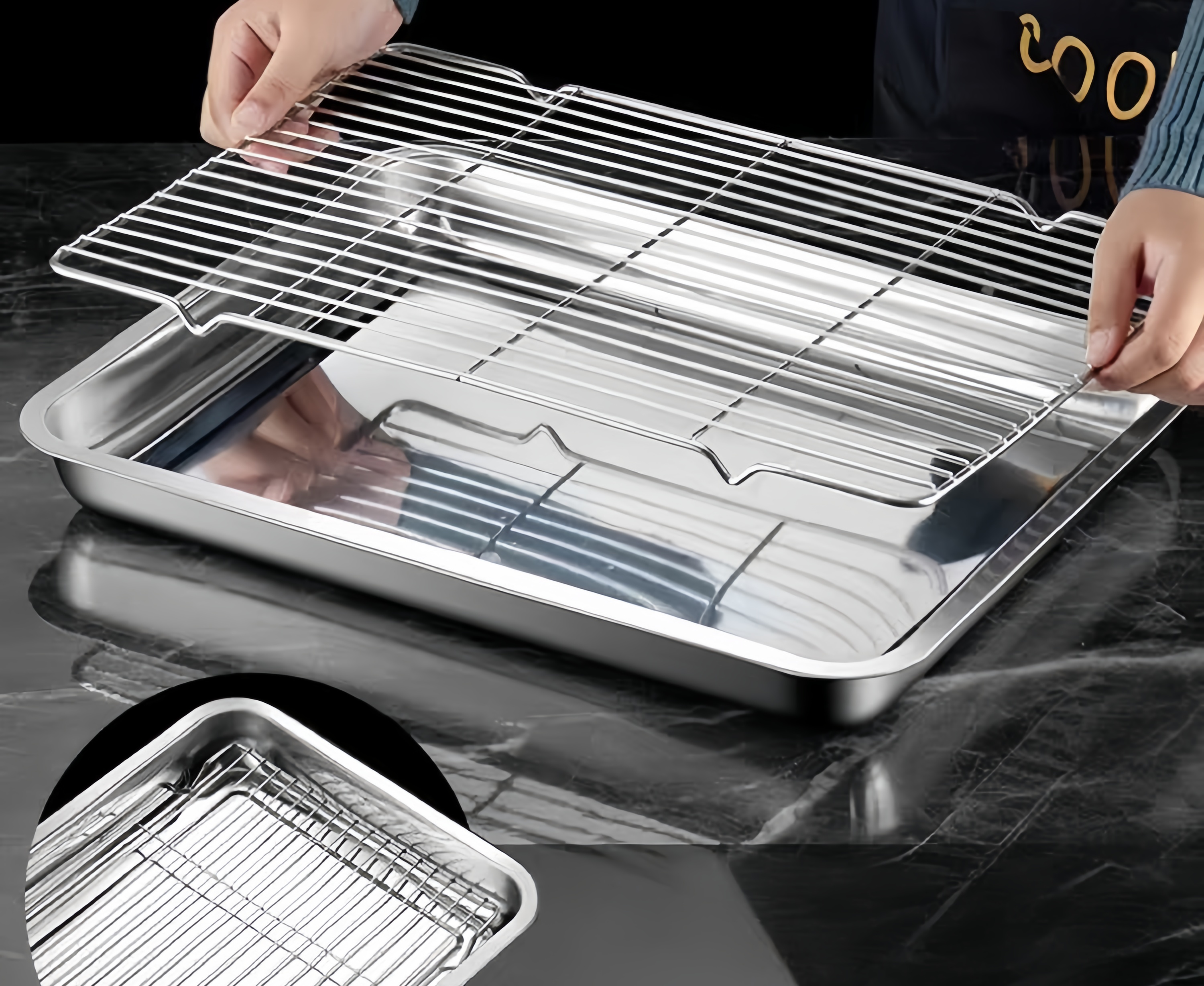

A BBQ grill mesh with support legs creates a raised cooking surface above charcoal, a fire tray or the bottom of a barbecue appliance. The raised structure can improve product positioning and make the grill mesh suitable for different cooking equipment.
However, the legs also affect stability, overall height, load capacity, packaging and manufacturing cost. Importers should therefore evaluate more than the diameter of the cooking surface. These six factors can help buyers choose a suitable structure for wholesale or customized orders.
Why Choose a BBQ Grill Mesh with Support Legs?
A raised grill mesh can be placed directly over a heat source or inside equipment that does not already have a built-in support ledge. It may be used for outdoor barbecue, 캠핑, restaurants, food preparation and customized cooking appliances.
Support legs can also create clearance beneath the mesh for charcoal, trays or other components. The required clearance depends on the equipment and cooking method.
Because grill designs are different, there is no single leg height suitable for every application. Buyers should provide the actual installation dimensions instead of selecting a product only from a photograph.
1. Select the Correct Support-Leg Height
Leg height determines the distance between the cooking surface and the base below it. This distance may influence heat exposure, airflow and compatibility with the cooking equipment.
Before confirming a BBQ grill mesh with support legs, buyers should measure:
Available internal height
Required cooking-surface height
Distance from the heat source
Grill lid clearance
Height of surrounding components
Maximum permitted product height
A low support structure may be suitable for compact charcoal grills or shallow trays. Taller legs may provide more space below the cooking surface, but they can also increase the risk of instability if the frame is not properly designed.
The required leg height should be stated clearly in the product drawing, including the permitted tolerance.
2. Confirm the Number and Position of the Legs
Support legs must be positioned so the product stands evenly. The number of legs depends on the product diameter, frame design, expected load and installation surface.
Three correctly positioned supports can provide stable contact on some round products, while larger designs may require four or more support points. The best structure should be determined through design evaluation and sample testing rather than applying one arrangement to every product.
Legs should not interfere with charcoal placement, heating components or other parts of the barbecue equipment. Their position should be measured from fixed reference points on the frame.
Buyers should request a drawing showing the number, position, direction and height of every support leg.
3. Test Stability and Load Distribution
A raised grill mesh should remain stable when placed on its intended surface. During sample inspection, check the product both without food and with a representative load.
Place the grill mesh on a flat inspection table and look for:
Rocking between support points
Uneven leg height
A tilted cooking surface
Bent or twisted legs
Frame deformation
Excessive sagging under load
If the grill mesh is large, a stronger outer frame or internal reinforcement may be needed. The support legs should transfer the load to the base without concentrating excessive stress at one welded point.
Testing the sample inside the actual cooking equipment is the best way to confirm fit and stability.
4. Inspect Leg Welding and Frame Strength
The connection between each support leg and the outer frame is an important quality-control point. Welds should be complete, properly positioned and consistent with the approved drawing or sample.
The welding area should not have obvious sharp projections, loose joints or excessive burn marks. If the legs are repeatedly folded, moved or loaded during use, the manufacturer must understand this requirement before selecting the connection structure.
Frame thickness should match the product size and expected weight. A thin frame may deform even when strong legs are used.
Our Round Stainless Steel BBQ Grill Mesh with Support Legs can be customized according to the required diameter, mesh opening, wire thickness, frame structure and support-leg dimensions.
5. Choose the Material and Surface Treatment
Buyers should specify the required stainless steel grade in the purchase order. Available options may include 201 or 304 스테인레스 스틸, depending on the intended market, budget and operating environment.
The material requirement should apply to the mesh, outer frame and support legs unless different materials have been approved.
Electropolishing can improve surface brightness and cleanliness. Trimming and finishing should also remove obvious burrs, protruding wire ends and sharp welding residue.
For food-related applications, buyers should confirm all applicable requirements in the destination market. The FDA Food Code provides model guidance for food safety in retail and food-service establishments, but individual markets and customers may have additional requirements.
6. Provide Complete Dimensions for Custom Production
When requesting a quotation for a BBQ grill mesh with support legs, buyers should provide:
Overall grill-mesh diameter
Total product height
Support-leg height
Number and position of legs
Mesh opening
Mesh wire diameter
Outer-frame diameter
Stainless steel grade
Expected load
Surface treatment
Required tolerances
Order quantity
Packaging requirements
Drawing, photograph or sample
Complete specifications help the manufacturer calculate material usage, production difficulty and packaging dimensions accurately.
Consider Packaging and Stacking
Support legs make packaging more complicated than packaging a completely flat grill mesh. Incorrect stacking may bend the legs or cause them to scratch nearby products.
Products can be stacked in a consistent direction with suitable separators or protective materials between layers. If the legs prevent compact nesting, carton size and quantity per carton should be confirmed before mass production.
Buyers should request packaging photographs and check whether the support legs remain protected during handling and transportation.
Approve a Sample Before Bulk Production
A sample should be tested before placing a large order for a new size or support-leg structure. Buyers should check:
Overall diameter and height
Leg position and consistency
Product stability
Welding quality
Frame strength
Surface finishing
Fit inside the intended equipment
Packaging method
Once the sample is approved, its dimensions and structure should be recorded in a confirmed drawing or inspection sheet.
LittleMonkey Metal manufactures custom round stainless steel grill mesh for importers, wholesalers, barbecue brands and commercial food suppliers. 크기, material, mesh opening, 와이어 직경, frame thickness and support-leg structure can be customized according to purchasing requirements.