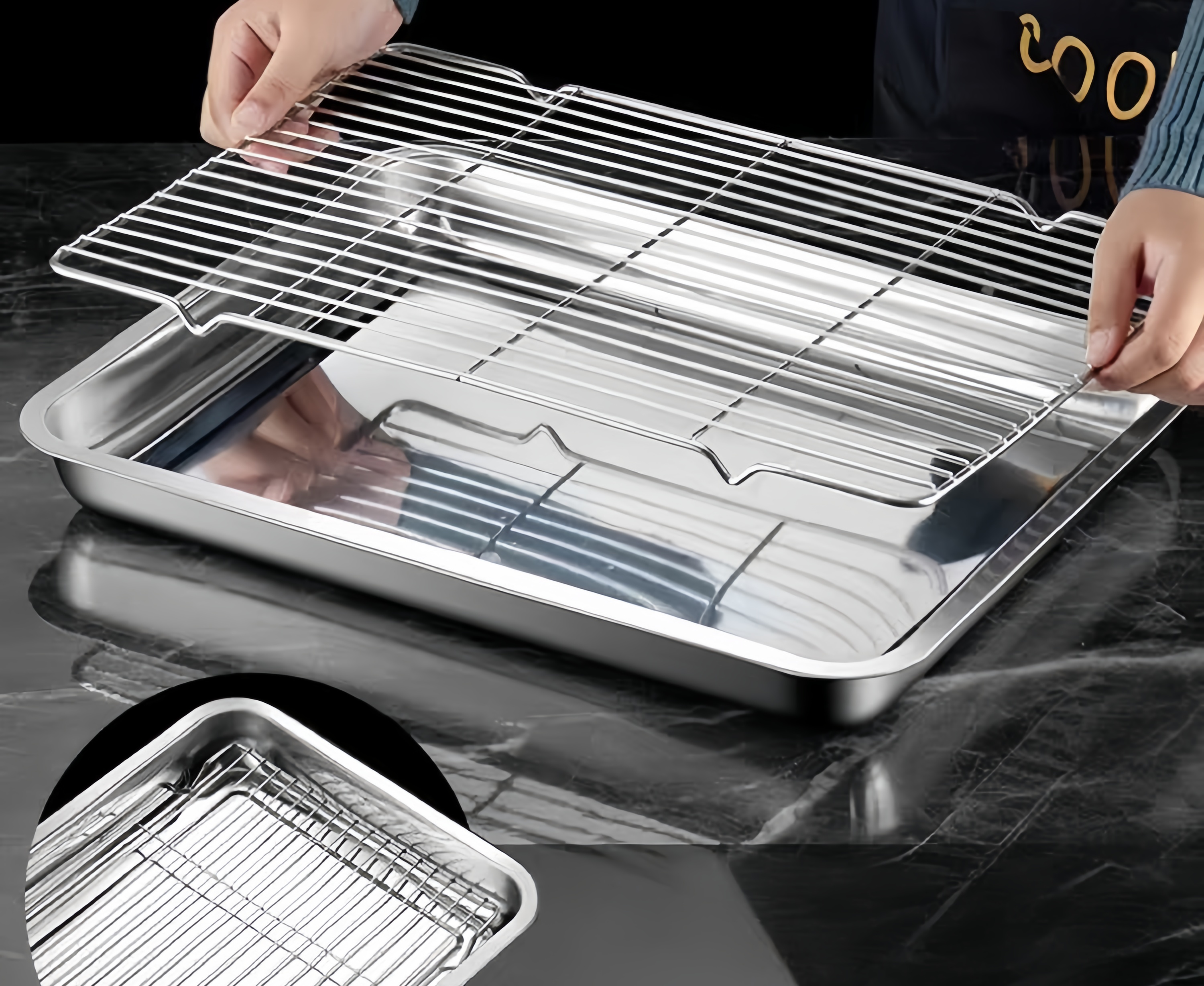
Stainless steel wire racks are widely used for BBQ grilling, 빵 굽기, cooling, drying, commercial ovens and food processing. Buyers often compare material grade, dimensions and wire diameter, but welding quality is equally important.
A rack manufactured from good stainless steel can still perform poorly if the welding points are weak, uneven or improperly finished. For commercial buyers, understanding basic welding quality helps reduce product failures and improve long-term purchasing value.
Why Welding Quality Matters
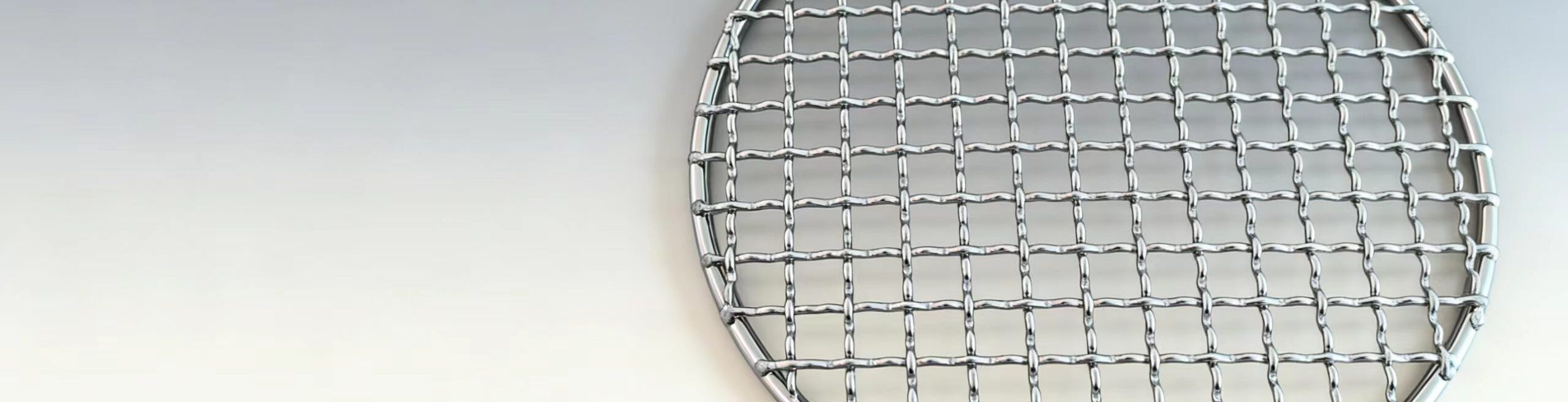
A stainless steel wire rack may contain dozens or even hundreds of welded intersections. These welding points connect the mesh wires to each other and secure the mesh structure to the outer frame.
Consistent welding helps the rack:
- Maintain its original shape
- Support the required load
- Resist deformation during repeated use
- Withstand handling, washing and transportation
- Provide a longer service life
Weak or incomplete welding can cause wires to become loose, especially when the rack is used under heavy loads or exposed to repeated heating and cooling cycles.
Weld Strength and Load Capacity
Different applications require different structural strength.
A lightweight baking cooling rack may only support cookies, bread or small food products. A heavy-duty grill grate may need to support meat, cookware or commercial food loads.
The manufacturer should therefore select a suitable combination of:
- Mesh wire diameter
- Outer-frame diameter
- Mesh opening
- Support wires
- Number and position of welding points
- Handle or leg structure
Little Monkey commonly manufactures standard mesh structures using approximately 1.8 mm wire. Heavy-duty products may use approximately 2.5 mm wire, depending on the rack size, frame design and required load.
A thicker wire alone does not guarantee a strong rack. The complete structure and welding consistency must also be considered.
Uniform and Complete Welding Points
Commercial buyers should inspect whether the welding points are evenly distributed and securely connected.
A good welded wire rack should not have:
- Loose mesh wires
- Missing welding points
- Sharp welding projections
- Excessive burn marks
- Large variations between welds
- Frames that separate from the mesh
For bulk OEM orders, the manufacturer should maintain consistent welding parameters so that products from different production batches have similar strength and appearance.
Heat Discoloration and Surface Oxidation
Welding produces high temperatures. When stainless steel is exposed to excessive heat and oxygen, coloured oxide layers may appear around the welding area.
Some light colour variation may be removed during subsequent surface finishing. However, excessive oxidation should be controlled because the weld area and heat-affected zone require proper cleaning and finishing to maintain a clean stainless steel surface.
After welding, suitable finishing processes may include:
- Cleaning
- Pickling
- Passivation
- Mechanical finishing
- Electropolishing
The appropriate process depends on the product specification and intended application.
Avoiding Iron Contamination
Stainless steel products should be handled separately from ordinary carbon steel whenever possible.
도구, grinding materials or work surfaces previously used on carbon steel may leave iron particles on stainless steel. These particles can later produce surface rust spots even though the main product material is stainless steel.
Professional production should therefore use suitable tools and maintain clean working conditions for stainless steel processing.
Buyers may ask the supplier how stainless steel materials are stored, welded, polished and cleaned during production.
Smooth Welds for Food Applications
For racks used in baking, cooling, drying or food processing, the welding points should be smooth enough for safe handling and effective cleaning.
Sharp burrs or rough projections may:
- Scratch hands during handling
- Trap food residues
- Make cleaning more difficult
- Damage packaging
- Reduce the professional appearance of the product
Electropolishing can help improve surface smoothness and brightness after fabrication. However, it cannot correct poor welding, large burrs or an unsuitable product structure. Welding quality must be controlled before surface treatment.
What Buyers Should Check Before Ordering
Before approving a sample or bulk order, buyers should confirm:
- Stainless steel grade
- Wire diameter
- Frame diameter or thickness
- Mesh opening
- Welding-point consistency
- Required load capacity
- Surface treatment
- Product dimensions and tolerances
- Handle or support-leg strength
- Packaging method
For customized racks, buyers should provide drawings, reference samples or detailed dimensions. A sample can then be checked before mass production.
Custom Stainless Steel Wire Rack Manufacturer
Little Monkey manufactures stainless steel grill mesh, baking cooling racks, drying racks, oven racks and custom wire mesh products.
Available options include:
- 201 or 304 스테인레스 스틸
- Custom dimensions
- Different wire diameters
- Custom mesh openings
- Reinforced outer frames
- Handles and support legs
- Electropolished surfaces
- OEM production according to drawings or samples
Our production process focuses on stable structure, consistent welding and smooth surface finishing for commercial applications.
Conclusion
Welding quality is a key factor in the performance of a stainless steel wire rack. Strong and consistent welding helps improve load capacity, 내구성, cleanability and long-term reliability.
Commercial buyers should evaluate more than material and price. The mesh structure, frame design, welding points and surface finishing should all match the intended application.
Contact Little Monkey with your dimensions, drawing, required load and application to discuss a customized stainless steel wire rack solution.