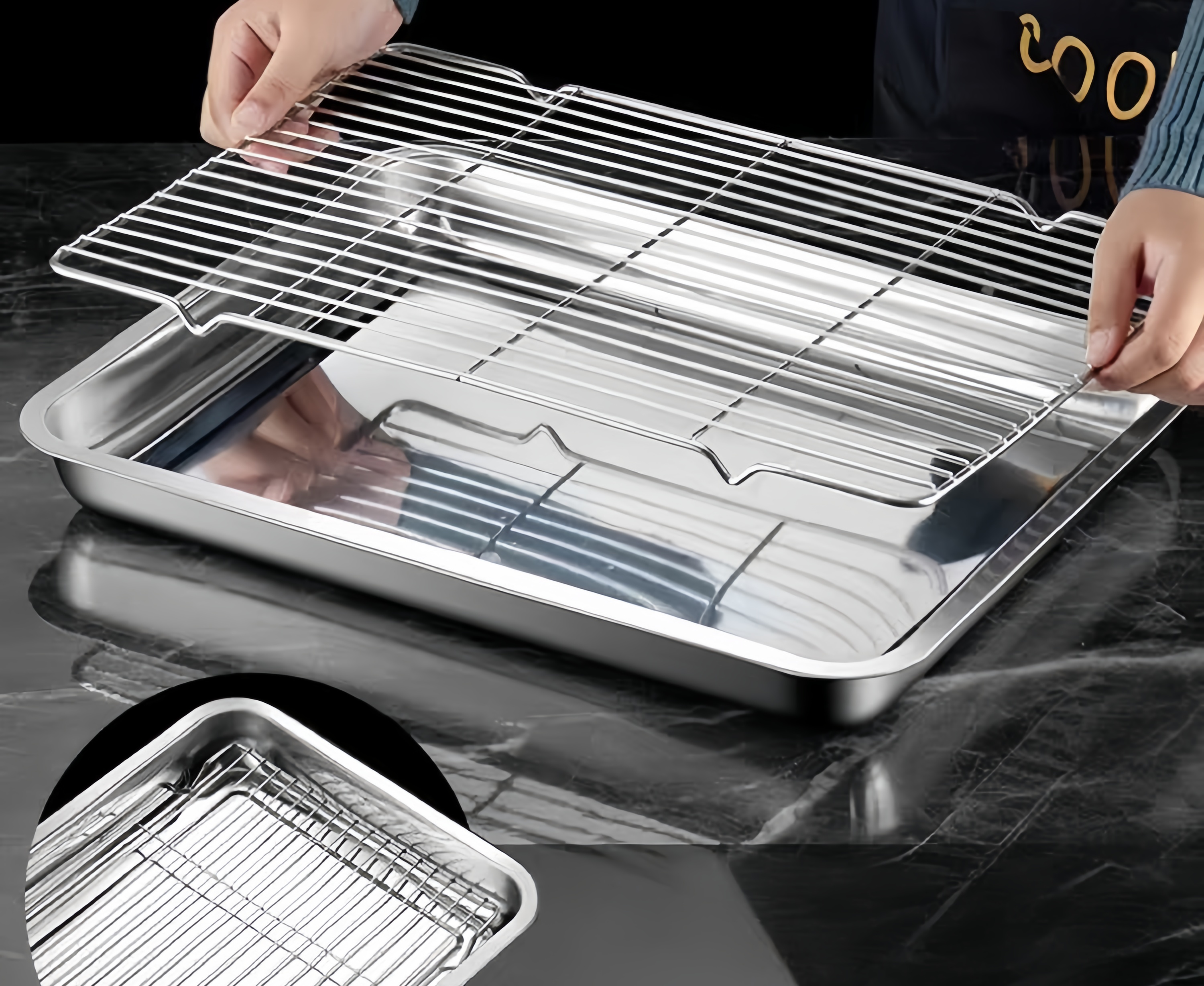
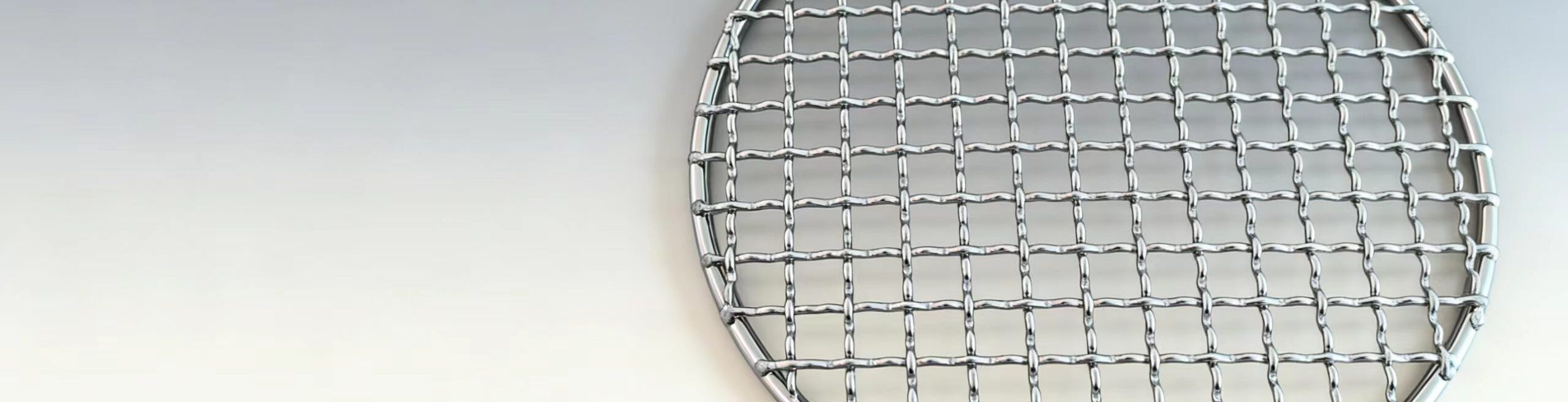
A bright stainless steel grill mesh finish can make a strong first impression, but brightness alone does not prove that every surface, weld and wire end has been processed consistently. For importers and barbecue-equipment brands, surface inspection should evaluate both appearance and practical usability.
Electropolishing can improve the appearance and cleanability of stainless steel products, but it cannot correct every manufacturing defect. Buyers should establish clear acceptance criteria before mass production instead of deciding whether the finish is acceptable only after the shipment arrives.
What Is an Electropolished Stainless Steel Grill Mesh Finish?
Electropolishing is an electrochemical surface-treatment process that removes a very thin layer from stainless steel. It can reduce microscopic high points and produce a cleaner, brighter and smoother-looking surface.
However, the final result may still be influenced by:
- Stainless steel grade
- Original wire condition
- Welding quality
- Weld discoloration
- Product geometry
- Process control
- Cleaning and rinsing
- Handling after treatment
A highly reflective surface is not automatically the best requirement for every market. Commercial buyers should define the finish according to product use, customer expectations and acceptable cost.
1. Approve a Physical Finish Reference
Descriptions such as “bright,” “smooth” or “premium finish” can be interpreted differently. One buyer may expect a mirror-like appearance, while another only requires a clean and consistent industrial finish.
Before bulk production, approve a representative sample or a clear set of reference photographs. Record:
- Required overall appearance
- Acceptable color variation
- Treatment of welded areas
- Permitted minor handling marks
- Areas customers will see
- Areas hidden after installation
The approved reference should be connected to the final drawing or purchase order. A sample without a product code or revision number can easily be confused with an earlier version.
2. Inspect Products Under Consistent Lighting
A stainless steel surface can appear different under warm indoor light, daylight or strong directional lighting. Inspection results may therefore change when buyers and manufacturers use different environments.
For a fair comparison, inspect the stainless steel grill mesh finish using:
- The same type of lighting
- A consistent viewing distance
- Similar viewing angles
- A clean background
- Dry products at normal room temperature
- A defined inspection time per piece
Avoid judging the complete shipment from one close-up photograph. Reflections can exaggerate minor marks or hide uneven areas depending on the camera angle.
3. Examine Welded Areas Carefully
Welding introduces heat and may create discoloration or a different surface appearance around the connection. Electropolishing may improve the appearance of these areas, but it does not make a poorly formed weld structurally acceptable.
Check the joints between:
- Mesh and outer frame
- Reinforcing wires and frame
- Overlapping wire intersections
- Handles or support components, if included
Look for incomplete connections, sharp welding projections, excessive residue, loose wires and serious discoloration. Appearance and strength should be treated as separate inspection items: an attractive weld may still be weak, while a secure weld may show slight visual variation.
Our 둥근 스테인레스 스틸 그릴 메쉬 is available with customized diameter, wire thickness, mesh opening and edge structure. The required finish should be confirmed together with these structural specifications.
4. Check Wire Ends, Edges and Burrs
Outer edges and cut wire ends deserve special attention because they are handled during installation, cleaning and packing. A bright surface does not guarantee that every projection has been removed.
Inspect the product for:
- Protruding wire ends
- Sharp frame joints
- Rough cut positions
- Welding spatter
- Raised burrs
- Unfinished edge connections
The acceptance requirement should match the intended use. A replacement grill grate frequently handled by consumers may require different edge treatment from a fixed industrial component.
Buyers should also distinguish a dangerous sharp projection from a harmless visual irregularity. Clear photographs can help both parties apply the same standard.
5. Look for Residue and Rinse Marks
After surface treatment, products should be cleaned, rinsed and dried appropriately. Residue, water marks or packaging dust can make an otherwise acceptable finish appear inconsistent.
Inspect several products from different parts of the batch rather than checking only the top piece in one carton. Use a clean cloth where appropriate to determine whether a mark is removable surface contamination or a permanent defect.
If cleanliness is important for the application, specify:
- Final cleaning expectations
- Drying requirements
- Handling method
- Individual protection
- Time between finishing and packing
Do not describe a product as sterile simply because it has been electropolished. Electropolishing is a manufacturing finish, not proof of sterilization.
6. Separate Scratches from Normal Variation
Wire products can contact fixtures, inspection tables, packaging materials and adjacent racks during manufacturing. Buyers should define how much cosmetic variation is acceptable.
A useful inspection standard can separate marks into categories:
- Deep scratches affecting the surface
- Visible scratches in customer-facing areas
- Minor handling marks
- Weld-area color differences
- Normal reflections caused by the wire shape
Extremely strict cosmetic requirements may require additional separators, individual wrapping and more inspection time. These requirements should be discussed before quotation because they can affect packaging and production cost.
7. Define the Inspection and Recording Method
A finish requirement is difficult to enforce without an agreed inspection method. Buyer and supplier should confirm:
- Inspection quantity
- Lighting conditions
- Viewing distance
- Reference sample
- Critical inspection areas
- Acceptance criteria
- Photograph requirements
- Method for separating defective pieces
If a specific surface-roughness value is required, include the measurement equipment, direction and location in the technical document. Visual brightness and measured surface roughness are not the same characteristic.
For broader technical background, buyers can review the Nickel Institute guide on specifying stainless steel surface treatments, which discusses electropolishing, passivation, pickling and mechanical cleaning.
Avoid Using Finish to Hide Manufacturing Problems
Electropolishing should be treated as one production stage, not as a method for hiding deep scratches, weak welds, incorrect dimensions or badly positioned wires.
A practical quality sequence is:
- Confirm raw material and dimensions.
- Inspect forming and welding.
- Complete the specified surface treatment.
- Clean and dry the product.
- Inspect appearance and critical edges.
- Protect the approved finish during packing.
This sequence helps prevent cosmetic inspection from replacing structural inspection.
Information to Include in Your RFQ
For an accurate quotation and stainless steel grill mesh finish recommendation, provide:
- Stainless steel grade
- Overall diameter
- Mesh-wire diameter
- Frame diameter
- Mesh opening
- Edge structure
- Required surface treatment
- Approved appearance reference
- Cosmetic inspection requirements
- Order quantity
- Individual packaging requirements
- Intended application
LittleMonkey Metal manufactures standard and customized stainless steel grill mesh for importers, wholesalers, barbecue brands and commercial-equipment companies. Send us your dimensions, application and finish requirements to discuss a suitable production solution and quotation.