
Outdoor cooking equipment needs to work in conditions that are less predictable than a home kitchen. A campsite may have an uneven fire, a compact portable stove, limited washing water and very little storage space. The grill mesh must therefore do more than hold food over heat. It should be stable, easy to carry, simple to clean and strong enough for repeated trips.
A stainless steel grill mesh for campingcan support meat, 물고기, vegetables and bread over a charcoal grill, fire pit or portable barbecue. Compared with a disposable wire rack, a reusable stainless steel design offers more consistent dimensions and a longer service life. The best choice depends on the cooking setup, the number of people being served and the way the mesh will be transported.
1. Start With the Outdoor Cooking Setup
The same grill mesh will not suit every campsite. Before choosing a size or shape, identify the heat source and the support surface available at the destination.
Fire pits and round charcoal grills
A round grill mesh is a natural fit for a circular fire bowl or kettle-style grill. Its perimeter can rest on the rim while the center remains above the coals. A circular design also works well when people gather around the fire and food needs to be spread across the available cooking area.
Portable square or rectangular grills
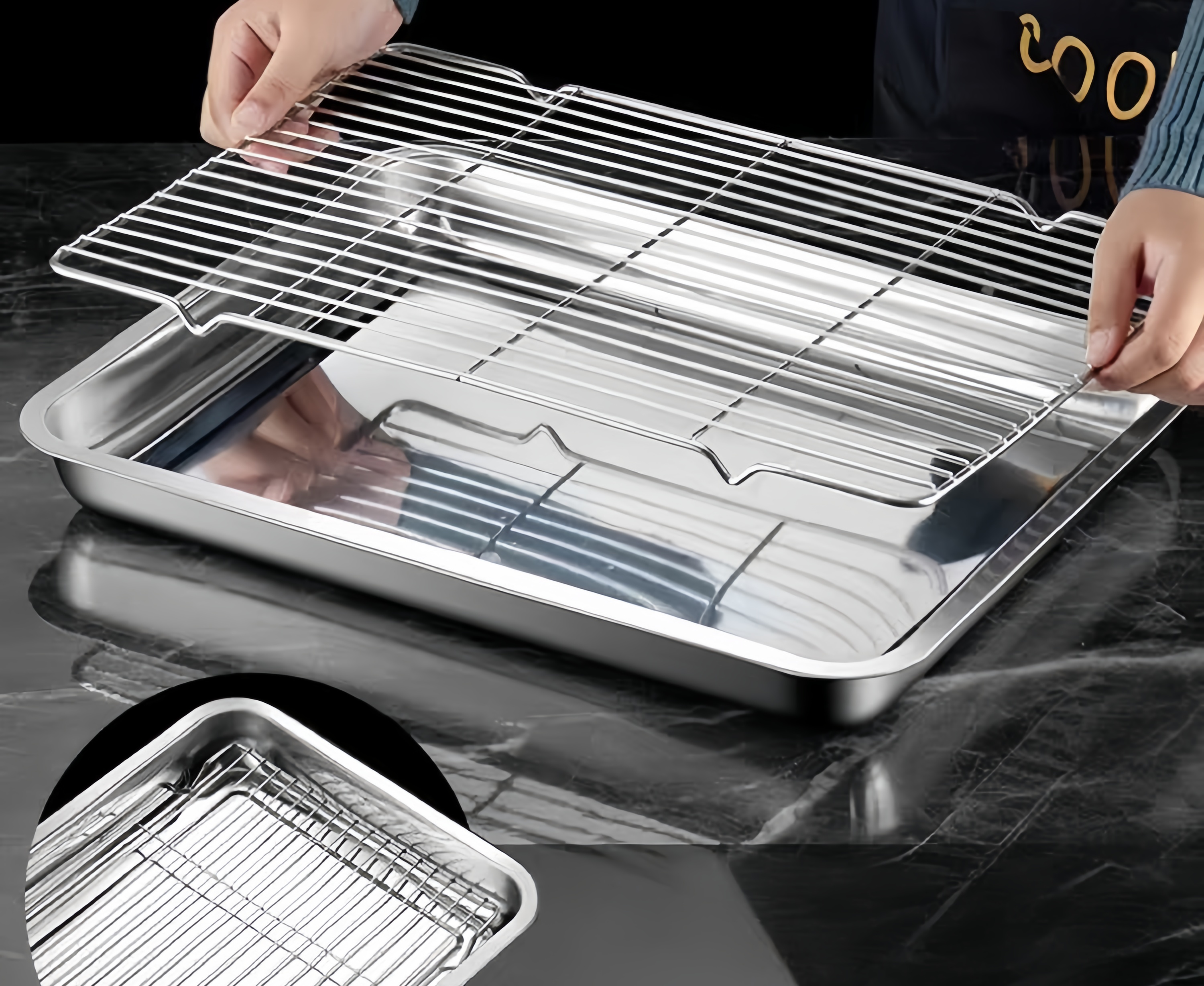
Square and rectangular meshes are useful when the camping grill has straight sides. They can make better use of a flat cooking grate and are often easier to pack alongside cookware. If the mesh will also be used on an oven shelf or baking tray, confirm the internal dimensions rather than relying only on the product’s nominal size.
Open fires and improvised supports
An open fire may not provide a perfectly level surface. In this case, frame rigidity and support-point placement become especially important. A mesh that rocks when empty can become unsafe once it is loaded with food. Check that the frame sits on three or more stable contact points, or use a separate grate designed for the fire pit.
2. Choose a Size That Matches the Group and the Pack
Large cooking surfaces are convenient at home, but oversized equipment can be awkward on a hiking trip. Select a usable cooking diameter or length based on both meal capacity and transport space.
For a small group, a compact mesh can reduce weight and heat-up time. A larger family or camping team may prefer a wider surface so that meat and vegetables can be cooked in one batch. Remember that the outside dimension includes the frame; the actual food area is smaller.
Measure the storage compartment, backpack sleeve or vehicle box before ordering. Also allow room for a heat-resistant bag or protective wrap. If the mesh must fit inside a pot or cooler, provide the clear internal diameter and height available after other equipment is loaded.
Standard round stainless steel grill meshes are available in diameters from approximately 80 mm to 800 mm, while custom sizes can be produced for a particular fire pit or portable grill. A drawing or photograph with measurements helps the manufacturer confirm the fit before sampling.
3. Select the Mesh Opening for Outdoor Foods
Camping menus often include a mixture of large and small ingredients. Sausages, steak and corn need a different level of support from shrimp, sliced mushrooms or diced vegetables.
Smaller openings provide more contact points and reduce the chance of food dropping into the fire. They are useful when the mesh will be used for mixed vegetables or small seafood. Larger openings can increase exposed heat and airflow for steaks, chicken pieces and other foods that bridge several wires.
If one mesh must serve many recipes, choose the opening according to the smallest loose ingredient. A removable fine-mesh insert or a foil tray can be added later for very small foods, but a mesh with openings that are too large cannot reliably hold them on its own.
The opening should also be considered alongside the wire diameter. A fine wire with a wide opening may be light, but it can flex under a heavy load. A thicker wire can improve strength but adds weight to the camping kit. Ask the supplier to recommend the combination rather than specifying opening size alone.
4. Material Choice for Outdoor Exposure
Camping equipment is exposed to moisture, smoke, grease and sometimes salty air. Stainless steel is widely used because it resists rust better than ordinary carbon steel and can be washed and reused between trips.
304 stainless steel is a common choice for frequent outdoor cooking and food-service use. It provides strong corrosion resistance and is suitable when the mesh will be washed regularly or stored for long periods. It is also a good option for premium private-label camping products.
201 stainless steel may be considered for cost-sensitive products or moderate-frequency use when it meets the requirements of the target market. Importers should confirm the material grade and any food-contact documentation needed for their region before approving production.
Material grade is only one part of durability. The frame, wire-to-frame welds and edge treatment should also be inspected. Smooth edges reduce handling risk when the mesh is packed and unpacked, while consistent welds help prevent wires from shifting during heating.
5. A Smooth Finish Makes Camp Cleaning Easier
Water and cleaning tools may be limited at a campsite, so residue should not be allowed to build up unnecessarily. An electropolished stainless steel surface is smooth and bright, which can help reduce the amount of grease and char that remains after washing.
The finish does not eliminate the need for cleaning. After cooking, allow the mesh to cool to a safe temperature, remove loose residue with a soft brush and wash it with a suitable detergent. Rinse away soap and dry the mesh before putting it back into a bag. Dry storage is important because trapped moisture can leave marks and create an unpleasant smell during the next trip.
Avoid using harsh abrasive tools that can scratch the surface. If food is stuck, soak the mesh when water is available or use a non-abrasive pad after the surface has cooled. Do not place a hot mesh directly on a plastic table, tent fabric or other heat-sensitive material.
6. Check Stability and Heat Clearance
Portability should not come at the expense of stability. Place the empty mesh on the intended grill or fire-pit supports and check for rocking before adding food. The frame should remain flat and should not slide toward the hottest part of the fire.
Measure the distance between the mesh and the fuel. If the cooking surface sits too close to charcoal, food may burn on the outside before the center is ready. If it is too far away, cooking may be slow and fuel consumption may increase. A mesh with legs, feet or a custom support can be specified when the standard rim of the grill does not provide the required clearance.
For open-fire use, test the mesh with the heaviest expected food load. Lift one side slightly with tongs or a suitable tool and confirm that the frame does not twist. Never move a loaded hot mesh by hand without proper heat protection.
7. Plan for Transport and Storage
The most practical camping grill mesh is one that can be packed without damaging other equipment. Consider these details before purchasing:
– Overall diameter or length after the frame is finished
– Whether the handle, feet or supports can be folded or removed
– Weight of the selected wire and frame combination
– Protection for sharp corners and welded edges
– Space needed for a storage sleeve or carton
– Whether several meshes can be stacked without nesting problems
A single long handle may be useful for a small portable grill, but it can make packing more difficult. A handle-free mesh may be better for a flat cooking grate, while double lifting handles can help with a larger surface used by a camping group. Describe the carrying method to the manufacturer so the final design supports both cooking and storage.
8. Test the Sample Before a Private-Label Order
Outdoor conditions are difficult to judge from a product photograph. Importers and camping brands should test a sample with the actual grill, fuel and menu before approving a larger order.
During the trial, confirm that:
1. The mesh fits the portable grill or fire pit with enough edge clearance.
2. The frame remains stable when the surface is empty and fully loaded.
3. The opening supports the smallest food item in the planned recipes.
4. The cooking height provides acceptable browning without excessive burning.
5. The mesh can be lifted safely with the intended tool or handle.
6. Grease and carbon can be removed with the cleaning method available outdoors.
7. The cooled mesh fits the storage bag, box or vehicle compartment.
Test at least one delicate food and one heavy food. This reveals problems with support, spacing and frame strength before the design is printed on packaging or released to distributors.
9. What to Include in an RFQ
A complete inquiry helps the manufacturer quote a camping grill mesh accurately. Include the following information:
| Requirement | Detail to Provide |
|—|—|
| Use environment | Camping, picnic, fire pit, portable grill or outdoor catering |
| Cooking surface | 둥근, square or rectangular; required clear size |
| Food types | Meat, 물고기, vegetables, seafood or mixed ingredients |
| Mesh opening | Target opening in millimeters |
| Wire diameter | Preferred weight and load balance, if known |
| Frame | Thickness, edge style and reinforcement |
| 재료 | 304 or 201 스테인레스 스틸 |
| Finish | Electropolished or another approved finish |
| Handling | No handle, single handle, double handles, feet or custom support |
| Packaging | Bulk carton, retail box, sleeve or private label |
| Order plan | Sample quantity, trial order and estimated annual volume |
Share the grill grate dimensions, a drawing or a physical sample whenever possible. If the product will be sold in several markets, also state the required labeling and food-contact documentation.
requently Asked Questions
Is stainless steel grill mesh suitable for a campfire?
Yes, when it is designed for direct high-temperature cooking and placed on a stable support. Confirm the material, frame strength and clearance from the fuel, and use normal fire-safety practices.
What size grill mesh is best for camping?
The best size is the smallest surface that can cook the planned portions in a practical batch. It should fit the grill or fire pit and still leave enough room for safe handling and storage.
Can a camping grill mesh be used in an oven?
Many stainless steel meshes can also be used on an oven shelf or baking tray, provided the dimensions, temperature rating and frame design are suitable. Confirm the intended equipment with the manufacturer before changing the application.
Which is better for camping, 304 or 201 스테인레스 스틸?
304 stainless steel is generally preferred for frequent use, repeated washing and more demanding outdoor exposure. 201 stainless steel can be considered for cost-sensitive products when it meets the requirements of the target market.
Final Takeaway
Choosing a stainless steel grill mesh for camping is a balance between cooking capacity and practical portability. Start with the fire pit or portable grill, then confirm the size, opening, 와이어 직경, frame stability, material and finish. A sample test with real food and the actual outdoor setup is the most reliable way to validate the design.
For OEM and wholesale camping products, provide the manufacturer with clear dimensions, transport limits and intended recipes. A well-specified mesh is easier to clean, safer to handle and more likely to perform consistently from the first weekend trip to repeated commercial use.