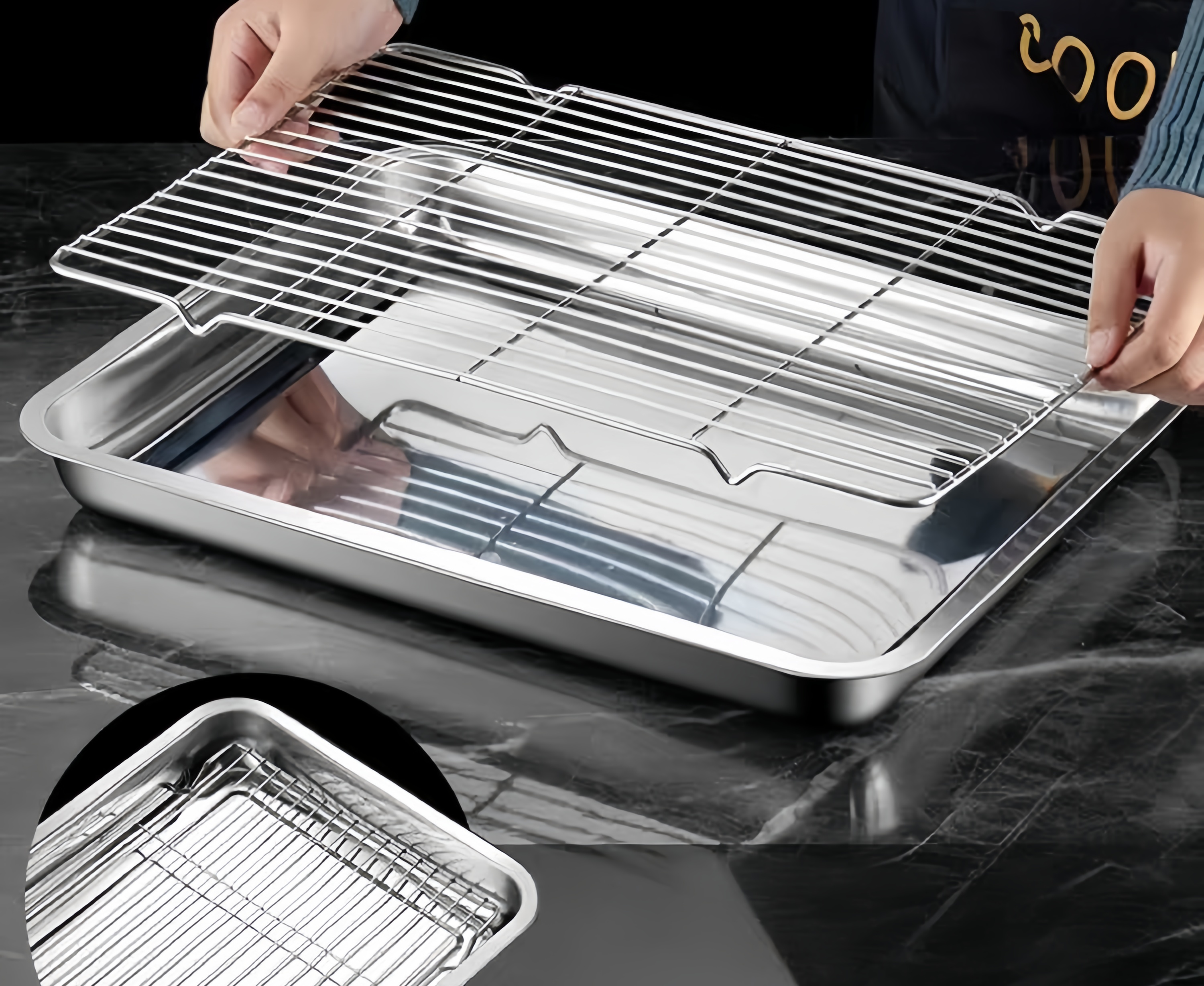

A stainless steel grill mesh inspection helps importers identify quality problems before a bulk order leaves the factory. Material grade, dimensions, welding, surface finish and packaging should all be checked against the confirmed drawing or approved sample.
A clear inspection standard reduces misunderstandings between buyers and manufacturers. It also helps prevent installation problems, customer complaints, rework and unnecessary international shipping costs. The following seven checks provide a practical quality-control process for customized grill mesh orders.
Stainless Steel Grill Mesh Inspection Before Shipment
Before production begins, the buyer and manufacturer should confirm the product drawing, material grade, dimensions, tolerances, wire diameter, mesh opening, frame structure and packaging method.
The approved drawing or sample should then become the reference for final inspection. Without a confirmed standard, different people may judge the same product differently.
1. Verify the Stainless Steel Material
Confirm whether the order requires 201, 304, 316 or another stainless steel grade. Buyers may request a material certificate from the manufacturer or arrange third-party material testing when necessary.
Material verification is especially important for food-processing, humid or coastal applications. Buyers ordering according to a particular wire specification should state it clearly in the purchase contract. For reference, ASTM A580/A580M covers commonly used stainless steel wire for general corrosion resistance and high-temperature service.
The inspection report should record the required material and the material identified in production.
2. Measure the Overall Dimensions
Check the length, width or diameter of the grill mesh with suitable measuring tools. Round products should be checked at more than one position, while rectangular products should be measured along both sides.
For a grill mesh that must fit inside an oven, barbecue grill or food-processing machine, even a small dimensional difference may cause installation problems. The buyer should therefore specify an acceptable tolerance instead of providing only a nominal size.
3. Check the Mesh Opening and Wire Diameter
Measure several mesh openings across different areas of the product. This helps confirm that the spacing is consistent rather than checking only one convenient position.
The mesh wire, straight bars and outer frame should also be measured separately. Thinner-than-specified wire can reduce product weight and strength, while incorrect spacing may affect food support, airflow and cleaning.
Our Square Stainless Steel Grill Mesh can be customized by overall size, mesh opening, wire diameter and frame thickness.
4. Inspect Welding and Frame Strength
Welded joints should be complete, properly positioned and firmly connected. Inspect the outer frame, mesh wires, support bars, handles and legs for loose or missing welds.
The frame should maintain the required shape without obvious twisting. For heavy-duty applications, support bars should be positioned according to the approved drawing. A careful stainless steel grill mesh inspection should also check whether welding has created sharp projections or excessive surface marks.
For applications requiring a stronger structure, buyers may consider a Straight-Bar Stainless Steel Grill Mesh.
5. Examine the Surface and Edges
Check whether the surface treatment matches the order requirements. Electropolished products should appear clean and consistent, although slight variations may occur because of product shape and welding positions.
Cut wire ends, burrs, sharp edges, welding residue and serious scratches should be inspected carefully. Smooth edge finishing is particularly important for products that will be handled, cleaned or packed individually.
6. Check Flatness and Deformation
Place the grill mesh on a flat inspection table. Check for raised corners, a twisted frame or excessive sagging in the center.
Large grill meshes may require reinforced frames or additional support bars to maintain stability. Buyers should agree on a flatness tolerance when product fit is critical. Inspection should be performed after welding and surface treatment because both processes may affect the final shape.
7. Confirm Quantity and Export Packaging
Count the products and confirm the quantity per bag, carton, pallet or wooden case. Check product labels, carton markings and barcode information when private-label packaging is required.
Packaging should protect the grill mesh from deformation, scratches, moisture and movement during transportation. Heavy products may require reinforced cartons, pallets or wooden cases. Packing photographs should be taken before the shipment is sealed.
Request a Stainless Steel Grill Mesh Inspection Report
For customized orders, buyers can ask the manufacturer to provide:
Material information
Dimension records
Wire and frame measurements
Welding and surface photographs
Quantity confirmation
Packaging photographs
Final inspection result
A sample should be approved before mass production when the structure or dimensions are new. For larger or technically demanding orders, buyers may also arrange an independent pre-shipment inspection.
LittleMonkey Metal manufactures custom stainless steel grill mesh for importers, wholesalers, BBQ equipment brands and commercial food applications. Send us your drawing, sample and inspection requirements to receive a production recommendation and quotation.