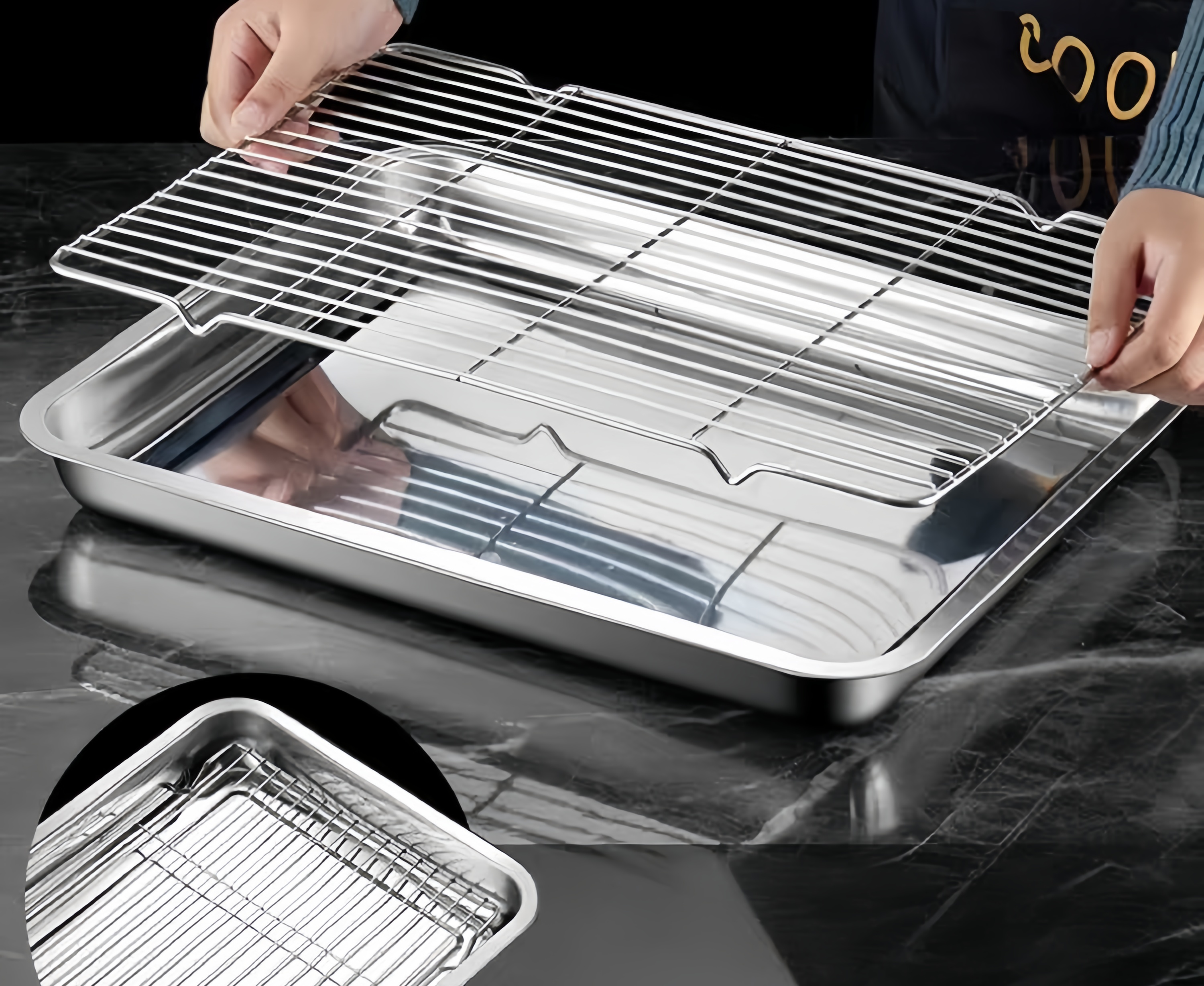

One incorrect dimension can turn a full shipment of grill meshes into unusable inventory. A photograph may show the surface, but it cannot confirm equipment fit, handle balance, frame strength or actual cleaning performance.
Testing a stainless steel grill mesh sample before mass production helps importers identify these problems while changes are still manageable. The following eight tests provide a practical approval process for customized and OEM orders.
Why Request a Stainless Steel Grill Mesh Sample?
Custom grill meshes may differ in diameter, wire thickness, mesh opening, frame structure, handles, support legs and surface treatment. Even when a drawing appears correct, the physical product may behave differently inside the intended equipment.
A sample allows buyers to evaluate three important areas:
- Does the product match the confirmed specifications?
- Does it work correctly in the intended application?
- Can the approved design be used as a clear standard for bulk production?
The sample should represent the intended order as closely as possible. If different materials or processes are used for the sample and mass production, those differences must be explained before approval.
1. Compare the Sample with the Drawing
Begin by checking every critical dimension against the latest drawing. Do not rely on the product’s general appearance.
Measure:
- Overall length, width or diameter
- Mesh opening or bar spacing
- Inner-wire diameter
- Outer-frame diameter
- Handle dimensions
- Support-leg height
- Reinforcing-bar position
- Total assembled height
Confirm the measuring points with the manufacturer. Measuring the outside of a frame is different from measuring its centerline or usable cooking area.
Record the results instead of approving the sample only through a message saying that it “looks good.”
2. Verify the Material Requirement
Confirm whether the order requires 201, 304, 316 or another stainless steel grade. The selected material should match the purchase order and approved specification.
A buyer may request appropriate material documentation or arrange independent testing when the material grade is critical. However, material identification alone does not confirm the quality of welding, finishing or construction.
The mesh, frame, handles and support components should also be checked to determine whether the same material requirement applies to every part.
3. Test the Fit in the Actual Equipment
Place the stainless steel grill mesh sample inside the intended barbecue, oven, tray, rack or food-processing equipment.
Check whether the product:
- Enters and exits without becoming stuck
- Has sufficient thermal and installation clearance
- Sits correctly on the support points
- Interferes with the lid or heating components
- Moves excessively during use
- Can be removed for cleaning
Testing inside the actual equipment is particularly important for replacement parts. A product can match the nominal dimensions and still fail because of corner radii, guide rails or unrecorded obstructions.
4. Inspect Welding and Structural Strength
Examine the connection between the mesh, outer frame, support bars, handles and legs. Welds should be complete and positioned according to the approved design.
Look for:
- Missing or loose welds
- Excessive sharp projections
- Uneven component positions
- Frame distortion
- Movement at handle connections
- Detached inner wires
- Inconsistent support bars
Do not evaluate strength by appearance alone. The buyer should apply a representative load based on the intended use without exceeding the agreed test conditions.
Testing requirements should be discussed with the manufacturer before the sample is produced.
5. Check Handle Balance and Usability
For a handled grill mesh, grip space and balance are as important as handle length. Test the product when empty and with a representative food load.
Our Round Stainless Steel BBQ Grill Mesh with Handle can be customized with a single handle, two lifting handles or another agreed structure.
When checking the sample, consider:
- Grip clearance
- Handle angle
- Connection strength
- Product balance
- Equipment interference
- Packaging length
Because stainless steel conducts heat, product instructions should not suggest that an exposed metal handle will always remain cool during cooking.
6. Examine Flatness and Stability
Place the sample on a suitable flat surface. Check whether the frame is twisted, the center sags or the corners lift noticeably.
For products with support legs, confirm that all required support points contact the surface correctly. A raised grill mesh should not rock excessively or tilt under its expected load.
Large products may require a stronger frame or additional reinforcement. If flatness is critical, include an agreed acceptance limit and measurement method in the drawing.
7. Evaluate Surface Finish and Cleaning
Inspect the surface under suitable lighting. Check for burrs, protruding wire ends, rough welding residue, serious scratches and areas that may be difficult to clean.
If electropolishing is required, evaluate whether the overall appearance is sufficiently consistent for the target market. Minor visual differences may occur around welded areas, so the buyer should identify which appearance requirements are essential.
Wash the sample using the cleaning method expected in actual use. This can reveal inaccessible areas, trapped residue or unstable components that may not be obvious during visual inspection.
8. Test the Packaging Method
A strong product can still arrive damaged if the packaging is unsuitable. Ask the supplier to prepare the sample using the proposed bulk-order protection whenever practical.
Evaluate:
- Individual bags or separators
- Protection for handles and legs
- Movement inside the carton
- Carton strength
- Product stacking direction
- Label information
- Ease of unpacking
A single courier package is not identical to palletized sea-freight packaging, but it can still help both parties identify vulnerable areas.
Turn the Approved Sample into a Production Standard
After testing, provide written approval or a clear list of required changes. The final stainless steel grill mesh sample should be connected to:
- A revision-controlled drawing
- Confirmed material requirements
- Approved packaging instructions
- Inspection photographs
- Critical dimension records
- Functional test requirements
For bulk orders, buyers and manufacturers should agree on the sampling quantity, inspection items and acceptance criteria before production.
An approved sample does not replace bulk inspection. It gives the buyer and manufacturer a physical reference for interpreting the confirmed requirements.
Our Current Free Sample Policy
LittleMonkey Metal’s current Free Sample Policy provides:
- The sample product is free of charge
- The buyer pays the courier cost
- Shipping cost is quoted before sending
- For a bulk order, the sample shipping cost can be deducted from the first invoice
Send us your product dimensions, drawing, photograph or application information. We can discuss a suitable sample before you commit to mass production.
A carefully tested sample is not an unnecessary delay. It is one of the most effective ways to protect your bulk order, delivery schedule and customer reputation.