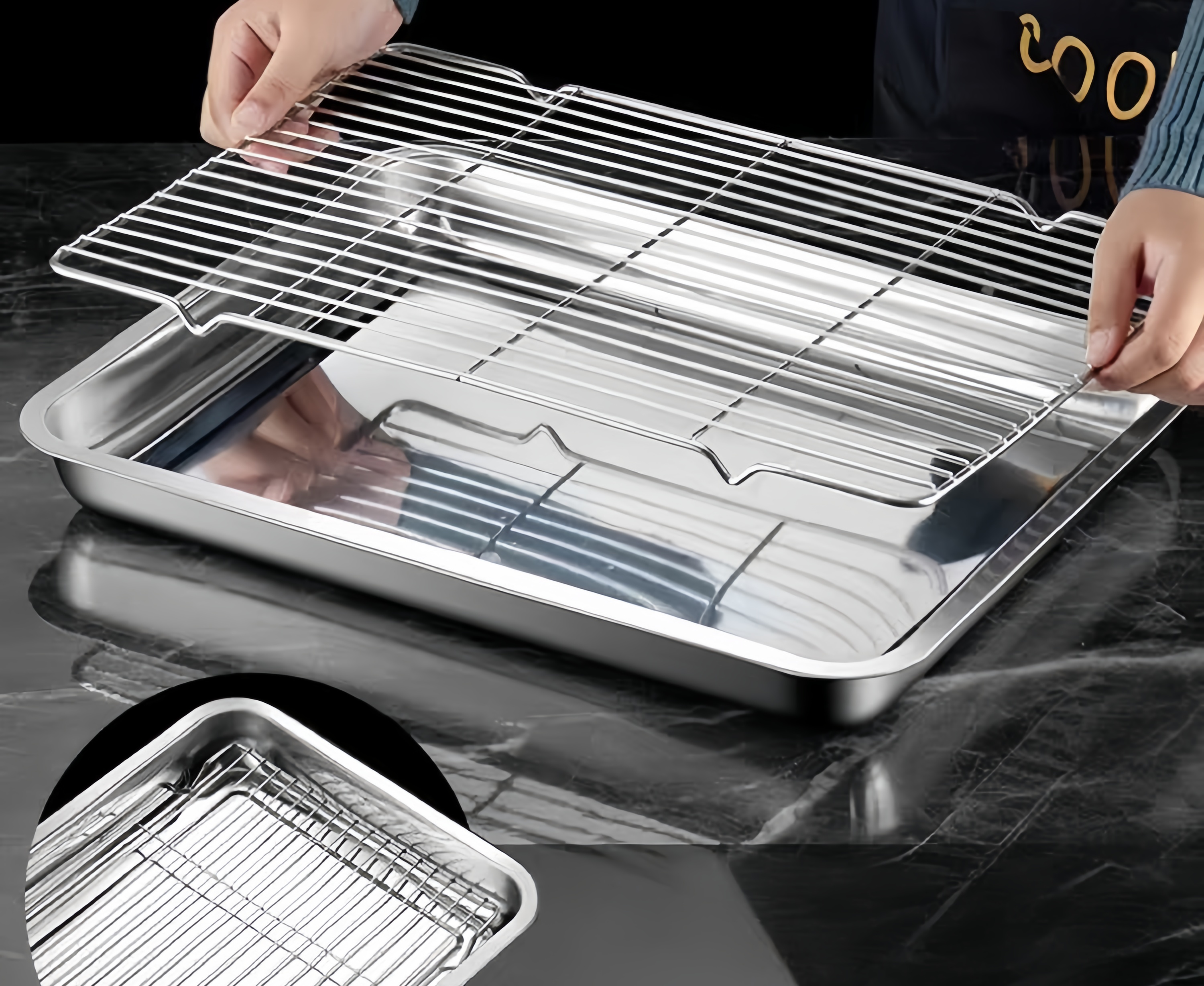

A stainless steel cooling rack with a competitive factory price may still become expensive after packaging, inland transportation and international freight are added. For importers and wholesalers, the true purchasing cost depends not only on the rack itself but also on how efficiently and safely the products can be packed.
Poor packaging can waste carton space, increase chargeable volume or allow frames to bend during transportation. Excessive packaging can also raise material and labor costs. These seven checks help buyers balance shipping efficiency with product protection before approving a bulk order.
Why Stainless Steel Cooling Rack Packaging Matters
Cooling racks contain open spaces, but freight companies calculate transportation cost from the completed package rather than from the amount of stainless steel inside it. A carton containing poorly arranged racks may occupy unnecessary space even when the products are relatively lightweight.
Packaging decisions can influence:
- Pieces packed in each carton
- Carton dimensions and gross weight
- Pallet quantity
- Container utilization
- Handling convenience
- Surface protection
- Risk of frame deformation
The best solution is not always the smallest carton. Packaging must protect the approved product structure throughout handling, storage and transportation.
1. Confirm the Finished Product Dimensions
Ask the manufacturer to confirm the finished length, width and total height of the rack. Handles, support feet, raised edges and reinforcing bars may increase the packing dimensions beyond the nominal cooking area.
Buyers should distinguish between:
- Overall outside dimensions
- Usable cooling area
- Frame height
- Total height including feet
- Size including handles
- Stacked height of multiple racks
These measurements are essential when calculating carton size. Estimating packaging from a product photograph can lead to inaccurate freight quotations.
2. Check Whether the Racks Can Nest or Stack
Some racks can be stacked closely, while raised feet or projecting handles may prevent efficient nesting. Buyers should ask the supplier to prepare a physical stacking trial using the intended production design.
A stacking trial can show:
- The height of 10 or 20 packed racks
- Whether feet enter the rack below
- Whether handles overlap correctly
- Whether welds rub against adjacent surfaces
- Whether pressure is concentrated on one part
- How easily workers can separate the products
Do not modify a functional design only to reduce carton volume. A smaller package offers little benefit if the change makes the rack unstable or unsuitable for the intended equipment.
3. Request a Packing-Quantity Comparison
Instead of approving the first packaging proposal, ask for two practical options. For example, the supplier may compare a lighter carton containing fewer racks with a stronger carton containing a larger quantity.
The comparison should include:
- Pieces per carton
- Carton dimensions
- Net and gross weight
- Packaging materials
- Number of cartons
- Pallet dimensions, if used
- Estimated loading quantity
Our Stainless Steel Baking Cooling Rack can be customized by size, wire diameter, mesh opening, frame thickness and shape. Because different structures produce different packed volumes, the packaging proposal should be prepared after the final product drawing is confirmed.
4. Protect Surfaces Without Excessive Packaging
Electropolished stainless steel surfaces can rub against adjacent products during a long shipment. However, wrapping every rack with several thick layers may unnecessarily increase packing time, material consumption and carton size.
Depending on the product structure and buyer requirements, protection may include:
- Individual bags
- Paper or plastic separators
- Corner protection
- Bundled groups
- Carton dividers
- Protective sleeves around handles or feet
The buyer should specify whether minor contact marks are acceptable and which visible surfaces require additional protection. This prevents the manufacturer from either underpacking the goods or adding protection that the market does not require.
5. Prevent Frame Deformation
Cooling racks may be exposed to compression, vibration and repeated handling during transportation. The packaging should prevent products from moving excessively inside the carton.
Empty space can be reduced with suitable fillers or a better carton arrangement. Heavy cartons should also be evaluated carefully because warehouse workers may drop or drag packages that are difficult to handle.
Before mass production, check whether the carton supports the outer frame rather than applying concentrated pressure to handles, feet or unsupported wires. Pallet strapping should secure the load without bending the products or crushing the cartons.
6. Verify Packaging with a Trial Carton
A sample product confirms the rack design, but one courier package does not necessarily represent bulk export packaging. Ask the supplier to prepare a trial carton using the proposed quantity and protection method.
The trial should check:
- Whether every rack fits correctly
- Whether the carton closes without excessive pressure
- Whether products move inside the package
- Whether labels remain visible
- Whether carton weight is practical
- Whether unloading and counting are convenient
Photographs of the trial carton can be included in the packaging approval document. For important orders, buyer and supplier can also agree on an appropriate transportation or handling test before shipment.
7. Compare Landed Cost, Not Only Unit Price
A lower unit price does not always create a lower total purchasing cost. Importers should compare product price together with packaging, freight, duties, local handling and the potential cost of damaged goods.
Request the following information with the quotation:
- Product unit price
- Packaging cost
- Carton size
- Pieces per carton
- Gross weight
- Estimated shipment volume
- Pallet information
- Proposed trade term
The agreed trade term determines how transportation tasks, costs and risks are allocated between buyer and seller. The official ICC Incoterms® rules provide guidance on these responsibilities. Buyers should still confirm the exact named place, freight quotation and local charges with their supplier and logistics provider.
Information to Include in Your Inquiry
For an accurate stainless steel cooling rack and packaging quotation, provide:
- Product drawing or required dimensions
- Stainless steel grade
- Wire and frame diameters
- Mesh opening
- Handles, feet or raised-edge requirements
- Order quantity
- Individual packaging requirements
- Label or barcode requirements
- Pallet requirements
- Destination country and postal code
- Preferred shipping method
- Required trade term
LittleMonkey Metal manufactures customized stainless steel baking and cooling racks for importers, wholesalers, bakeries, food-processing companies and commercial-equipment brands. Send us your specifications and order quantity to discuss the product structure, packaging plan and quotation.