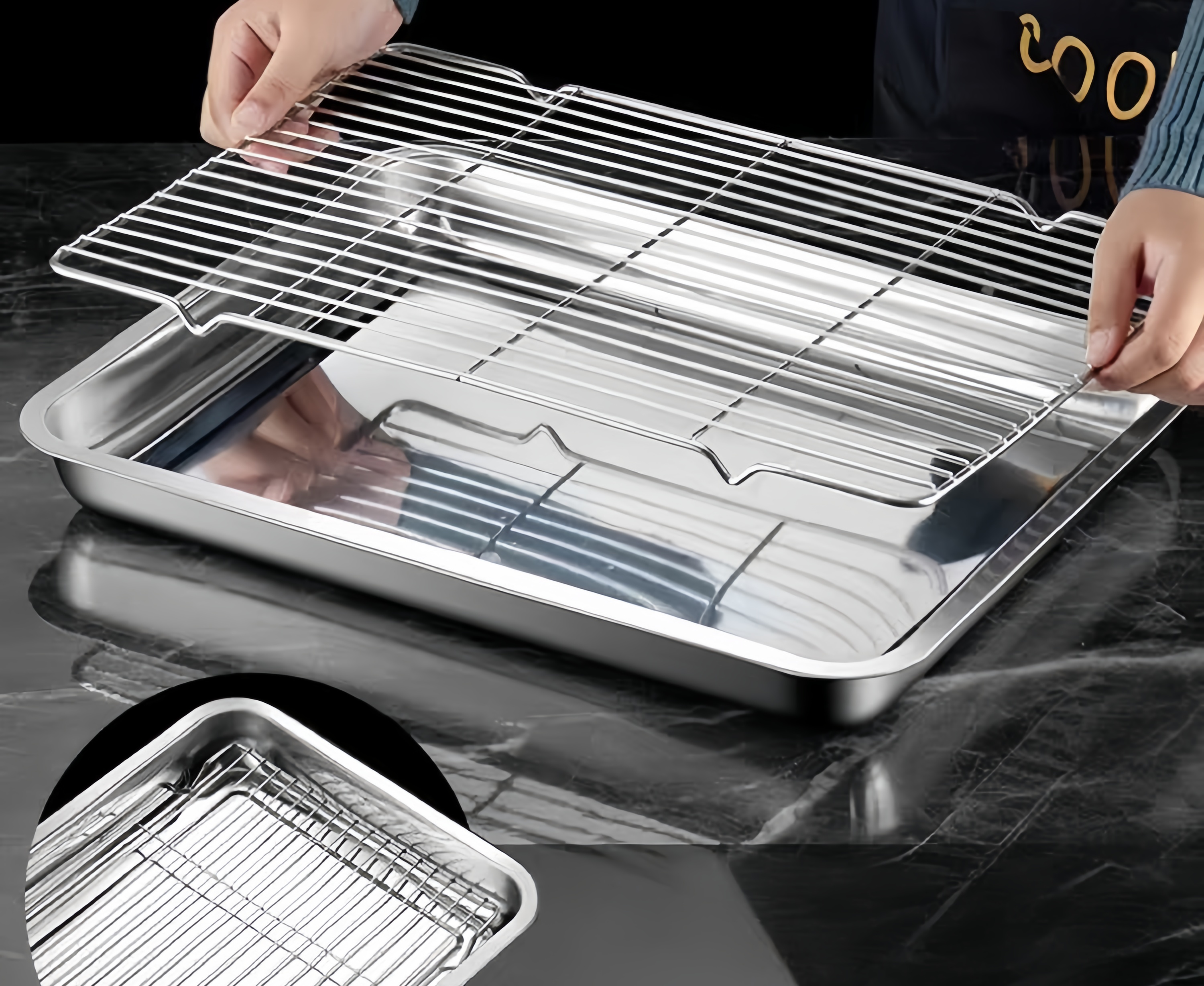

A straight bar grill grate may appear simple, but its performance depends on more than the outside dimensions and the thickness of its parallel bars. The number, position and construction of the cross supports underneath the cooking surface can affect alignment, flatness, load distribution and cleaning.
For importers, barbecue brands and commercial-equipment manufacturers, these structural details should be confirmed before approving a sample or placing a bulk order. The following seven checks can help buyers compare designs and communicate more accurately with a grill grate manufacturer.
Why Do Cross Supports Matter?
The long parallel bars form the main cooking surface, while transverse bars connect and support them. Without an appropriate support structure, long bars may move during manufacturing or behave inconsistently under a representative load.
Adding more supports is not automatically better. Unnecessary components can increase product weight, welding points, cleaning work and manufacturing cost. The suitable design depends on the grate size, bar diameter, spacing, frame structure, installation method and intended application.
There is therefore no single cross-support spacing that works for every straight bar grill grate.
1. Define the Intended Application
Begin with the equipment rather than selecting the grate structure from a photograph. A replacement grate for a commercial barbecue may have different requirements from a removable rack used in an oven or food-processing machine.
Tell the supplier:
- Where the grate will be installed
- How its edges are supported
- Whether it slides into guide rails
- The approximate working load
- Whether users frequently remove it
- The expected cleaning method
- Whether handles or locking features are required
These details help the manufacturer evaluate where support bars may be needed. Two grates with identical outside dimensions can require different structures when their installation and loading conditions are different.
2. Confirm the Main-Bar Diameter and Spacing
Main-bar diameter affects product weight, rigidity, heat response and price. Bar spacing affects food support, airflow and cleaning access.
The drawing should clearly state whether spacing is measured between adjacent bar surfaces or from one bar centerline to another. These two measurement methods do not produce the same result.
Buyers should also confirm whether every space must remain identical or whether an agreed manufacturing variation is acceptable. Extremely tight requirements may increase fixture and inspection costs without improving performance.
For OEM orders, record the following separately:
- Main-bar diameter
- Clear opening between bars
- Center-to-center spacing, if applicable
- Distance from the first bar to the frame
- Permitted variation
3. Specify the Cross-Support Arrangement
The drawing should show the number, diameter and exact position of every cross support. It should not simply state “add support bars,” because different factories may interpret this instruction differently.
Our Straight Bar Stainless Steel Grill Mesh can be customized by length, width, bar diameter, spacing, frame and support structure. The final arrangement should be reviewed according to the intended equipment and load.
Important questions include:
- How many cross supports are required?
- Are they positioned evenly?
- What is the unsupported length of the main bars?
- Will a support interfere with burners or mounting points?
- Can the underside still be cleaned conveniently?
- Is additional reinforcement needed near a handle or loading area?
A dimensioned drawing gives buyers a much clearer approval standard than a product photograph.
4. Inspect Every Welded Intersection
A cross support is effective only when its connections are suitable for the approved design. During sample inspection, examine the intersections between the main bars, cross supports and outer frame.
Look for missing connections, loose bars, sharp projections, excessive welding residue and visible distortion. Welding should hold the components in their intended positions without creating unnecessary areas that are difficult to clean.
Appearance alone does not prove structural performance. If strength is important, agree on a representative test method before production instead of applying an undefined manual force during final inspection.
5. Check Flatness and Equipment Fit
A grate can have the correct length and width but still fit poorly because its frame is twisted or its cooking surface is uneven.
Place the sample on a suitable inspection table and inside the actual equipment. Check whether it:
- Contacts the intended support points
- Enters and exits without becoming stuck
- Remains stable during normal handling
- Has suitable clearance around nearby components
- Avoids excessive rocking
- Can be removed for cleaning
Flatness requirements should identify the reference surface and measurement method. Simply writing “must be flat” can produce different interpretations during inspection.
6. Test a Representative Load
Before mass production, test the sample using conditions that reasonably represent the intended application. The test should consider both the amount of load and where that load is placed.
A centered load and an unevenly distributed load may affect the grate differently. Buyers should observe bar movement, permanent distortion, weld condition and stability on the equipment supports.
Do not publish or request a fixed load rating unless it has been defined and verified for that particular design. Product size, material, bar diameter, support spacing and installation method can all influence the result.
Record the approved test conditions so the same method can be used for future orders.
7. Consider Cleaning and Packaging
Support construction also influences areas where grease or food residue may collect. Buyers supplying commercial kitchens should evaluate whether the underside and welded intersections are accessible for the intended cleaning process.
The FDA Food Code 2026 provides general food-service safety and equipment context for the United States. It is a model code rather than a product certification, so importers must confirm the regulations and customer requirements that apply in their own market.
Packaging should also protect the grate’s straight bars and frame. Separators, sleeves or other protection may be necessary to prevent products from rubbing, shifting or becoming deformed during transportation.
Approve the Sample Before Bulk Production
The approved sample should be connected to a final drawing showing:
- Overall dimensions
- Stainless steel grade
- Main-bar and frame diameters
- Clear spacing between bars
- Cross-support quantity and position
- Welding requirements
- Flatness criteria
- Surface finish
- Packaging method
- Inspection procedure
Photographs can supplement the drawing, but they should not replace dimensions and written requirements.
A properly specified straight bar grill grate gives the manufacturer a clear production target and gives the buyer a practical inspection standard. This reduces misunderstandings when the product is repeated across different production batches.
LittleMonkey Metal manufactures standard and customized stainless steel grill grates for importers, wholesalers, barbecue brands and commercial-equipment companies. Send us your drawing, equipment dimensions, expected load, order quantity and application details to discuss a suitable structure and quotation.